
AI can now handle most of the repetitive parts of making a podcast: cutting silences, switching cameras, cleaning noisy audio, writing show notes and turning episodes into clips. The hard part is choosing tools, because most of them only do one job well.
This guide groups the best AI podcast tools and AI podcast editors by the job they do, with current prices and free plans so you can build a stack that fits your budget.
Quick picks: AutoPod for automatic video podcast editing in Premiere Pro and DaVinci Resolve. Descript for editing by transcript. Riverside to record and edit in the browser. Adobe Podcast for free voice cleanup. Castmagic for show notes. Gemini Notebook (formerly NotebookLM) to turn documents into an AI podcast.
How we picked these tools
We grouped tools by the job they do in a podcast workflow: editing, audio cleanup, clips, show notes and AI generation. We checked every tool’s official features and pricing pages on 23 November 2026 and captured the screenshots below. These are not lab tests: prices change often (several sites were running Black Friday discounts), so confirm the current price before you buy. Disclosure: this site focuses on AutoPod.
Best AI podcast tools compared
| Tool | Best for | Free plan | Paid from | Works on |
|---|---|---|---|---|
| AutoPod | Auto multicam & jump cuts | 30-day trial | $29/mo | Premiere Pro, DaVinci Resolve |
| Descript | Editing by transcript | Yes (60 media min/mo) | $16/mo yearly | Web app |
| Riverside | Record + edit in one place | Yes (720p, watermark) | $24/mo yearly | Web, Mac, iOS, Android |
| Premiere Pro | Text-based editing in a pro NLE | 7-day trial | Adobe subscription | Desktop |
| Adobe Podcast | Free one-click voice cleanup | Yes (1 h/day) | $9.99/mo (Firefly Pro) | Web |
| Auphonic | Leveling & loudness | Yes (2 h/mo) | $11/mo yearly | Web, API, DaVinci |
| Cleanvoice | Removing filler words | 30-min trial | $11/mo (10 h) | Web, API |
| Opus Clip | Short clips for social | Yes (limited) | $15/mo | Web |
| Castmagic | Show notes & content | Not listed | $19/mo yearly | Web |
| Gemini Notebook | AI podcast from documents | Yes | Google AI plans | Web, app |
| ElevenLabs | AI voices & dubbing | Yes (10k credits/mo) | $6/mo | Web, API |
What is an AI podcast editor?
An AI podcast editor uses speech recognition and audio analysis to do edits automatically. Depending on the tool, it can cut silences, switch to whoever is talking in a multicam shoot, remove filler words, clean background noise, or let you edit audio by deleting words in a transcript. You still decide what stays in the episode; the AI removes the busywork.
Best AI podcast editors
1. AutoPod: best for video podcasts in Premiere Pro and DaVinci Resolve
AutoPod is a plugin that edits multicam video podcasts for you inside the editor you already use. It reads who is speaking and switches cameras automatically, then adds jump cuts and social clips.
- Multi-Camera Editor: auto-switches camera angles by speaker and layout.
- Jump Cut Editor: removes silences based on your threshold.
- Social Clip Creator: builds vertical clips from your sequence.
| Free plan / trial | 30-day free trial on monthly plans |
| Paid from | $29/month per license |
| Works on | Premiere Pro (2023 or newer) and DaVinci Resolve |
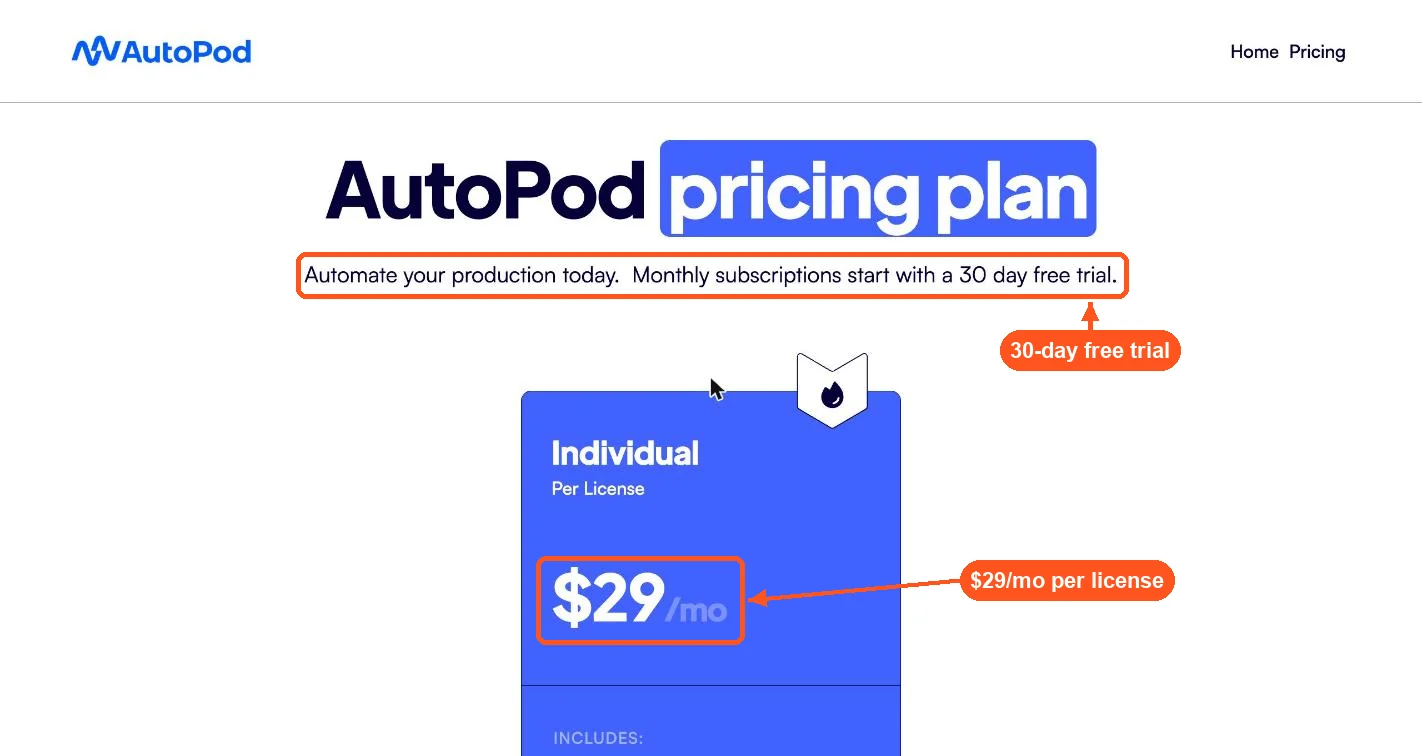
Verdict: The fastest way to cut a 2–4 camera podcast without leaving Premiere or Resolve. See how to use AutoPod.
2. Descript: best for editing audio and video by transcript
Descript turns your recording into a transcript, and you edit the episode by editing the text. It also bundles AI cleanup and clip tools, so many solo podcasters use it as their only editor.
- Text-based editing: delete words to cut audio and video.
- Studio Sound: one-click voice enhancement.
- Remove Filler Words, Create Clips and AI show notes.
| Free plan / trial | Free plan with 60 media minutes a month |
| Paid from | Hobbyist $16/month billed yearly ($24 monthly) |
| Works on | Web app |
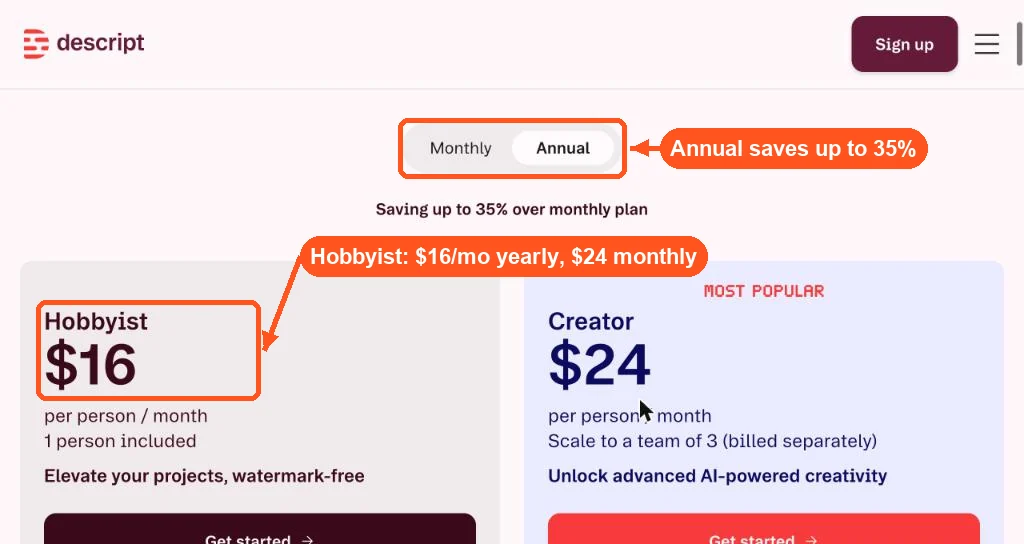
Verdict: The best all-in-one AI editor if you don’t already use Premiere or Resolve. Compare it with AutoPod in AutoPod vs Descript.
3. Riverside: best for recording remote guests and editing in one place
Riverside records each guest locally in high quality, then lets you edit by transcript and auto-generate clips and show notes in the same browser tab.
- Local multitrack recording for remote interviews.
- Magic Clips for short social videos.
- Magic Audio enhancement and AI show notes.
| Free plan / trial | Free plan (2 hours of recording, 720p, watermark) |
| Paid from | Pro $24/month billed yearly ($29 monthly), 14-day trial |
| Works on | Web, Mac app, iOS and Android |
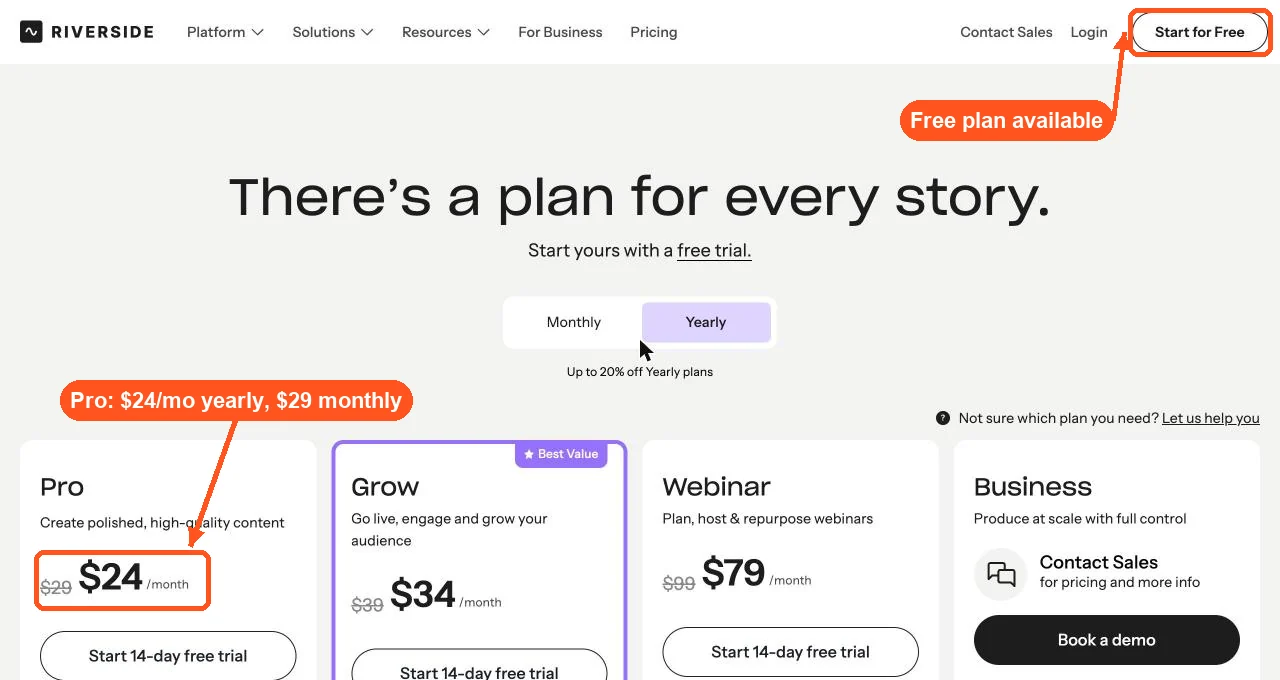
Verdict: Best if you record with remote guests and want one tool from recording to clips.
4. Adobe Premiere Pro (text-based editing): best for editors who already use Premiere
Premiere Pro’s built-in Text-Based Editing transcribes your footage so you can cut by selecting and deleting text. It handles the transcript side, while plugins like AutoPod automate camera switching and jump cuts.
- Automatic transcription inside Premiere.
- Cut, copy and paste by editing the transcript.
- Works alongside plugins such as AutoPod.
| Free plan / trial | 7-day free trial |
| Paid from | Included in an Adobe Premiere subscription (price varies by region) |
| Works on | Windows and Mac desktop |
Verdict: Use it if you already pay for Premiere. Pair it with AutoPod to automate multicam podcast edits.
Best AI tools for podcast audio quality
5. Adobe Podcast: best for free one-click voice cleanup
Adobe Podcast’s Enhance Speech makes a voice recording sound like it was recorded in a studio, removing background noise and echo in one click in your browser.
- Enhance Speech: removes noise and echo from voice.
- Browser-based recording with remote guests (separate WAV tracks).
- Transcript-based audio editing in Adobe Podcast Studio.
| Free plan / trial | Free plan: audio only, files up to 30 minutes, 1 hour a day |
| Paid from | Premium via Adobe Firefly Pro, $9.99/month |
| Works on | Web browser |
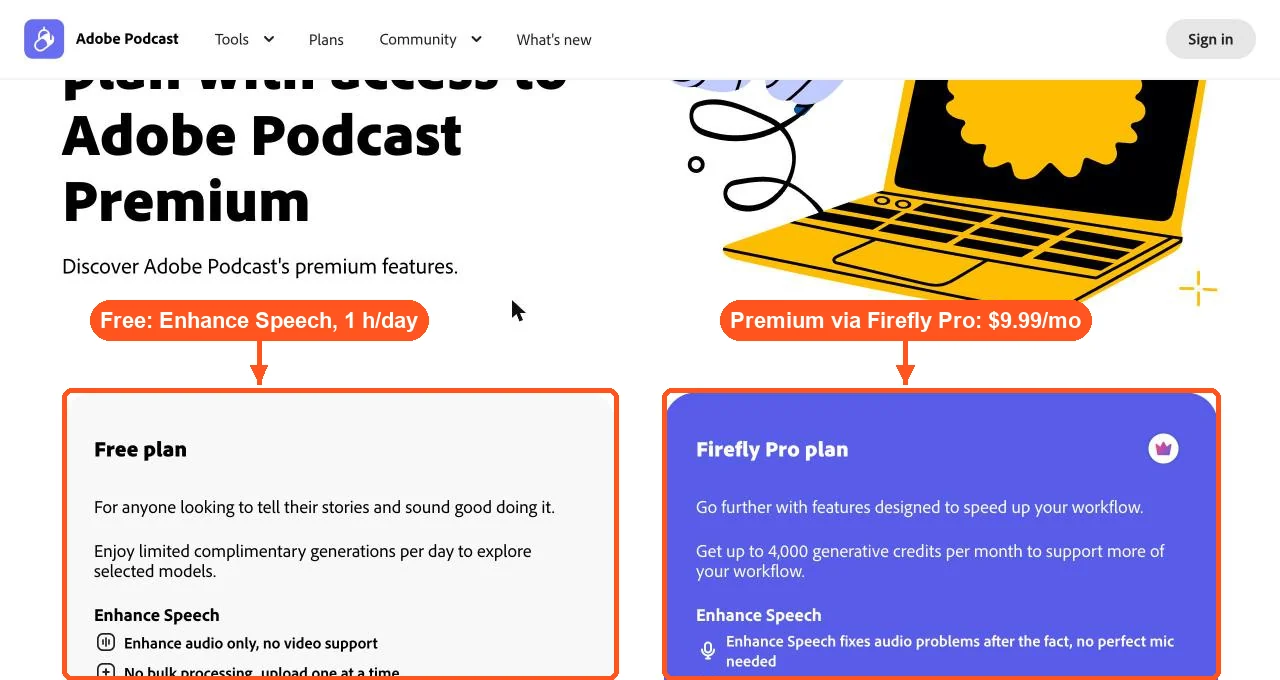
Verdict: The easiest free fix for a bad-sounding recording. Read our Adobe Podcast Enhance Speech guide.
6. Auphonic: best for consistent loudness on every episode
Auphonic is an automatic audio post-production tool. Upload a file and it levels volume, reduces noise and reverb, hits loudness targets for podcast platforms, and can transcribe and create chapters.
- Leveling, loudness normalization and noise reduction.
- Automatic filler, cough and silence cutting.
- Speech-to-text with automatic show notes and chapters (paid plans).
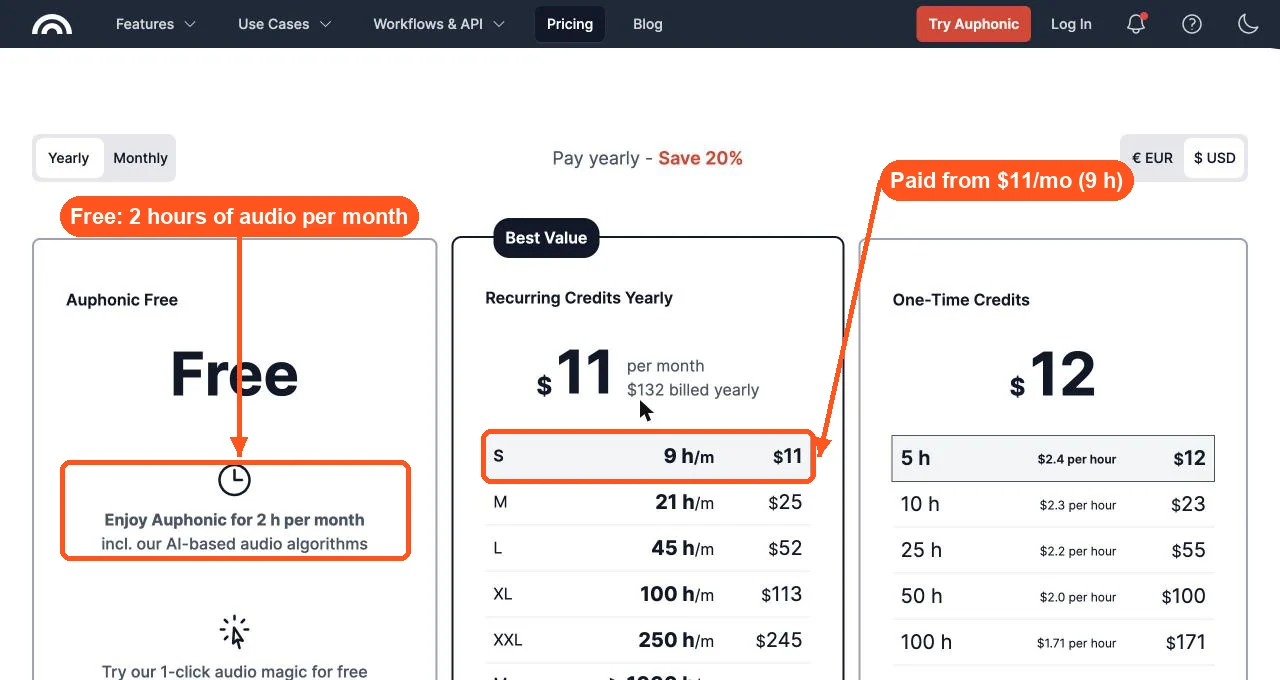
| Free plan / trial | Free: 2 hours of audio per month |
| Paid from | From $11/month billed yearly (9 hours a month) |
| Works on | Web app, API, and an integration for DaVinci Resolve |
Verdict: Best for set-and-forget audio processing on every episode.
7. Cleanvoice: best for removing filler words and mouth sounds
Cleanvoice listens for “um”, “uh”, stutters, mouth clicks and long pauses and removes them automatically, then exports clean audio or an edit timeline.
- Filler word and stutter removal.
- Background noise removal and audio enhancement.
- Timeline export for your editor.
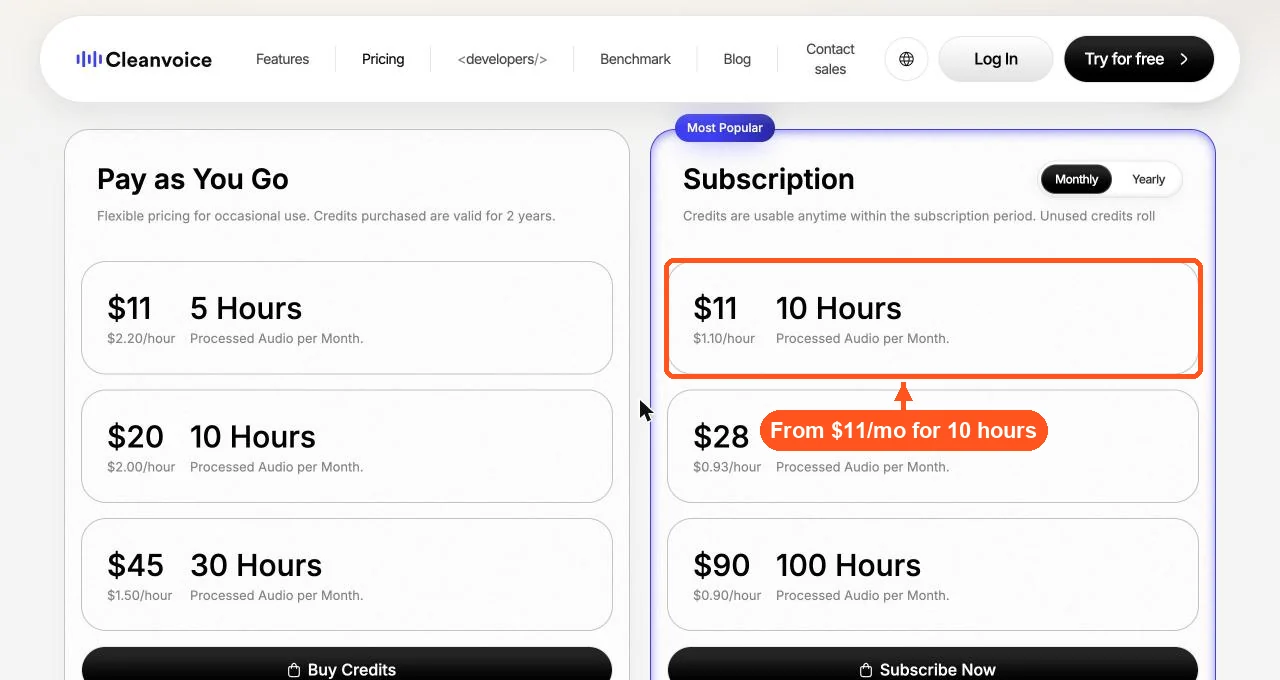
| Free plan / trial | 30-minute free trial, no card |
| Paid from | From $11/month for 10 hours |
| Works on | Web app and API |
Verdict: Great if filler words are your main problem and you edit elsewhere.
Best AI tools for podcast clips and show notes
8. Opus Clip: best for turning episodes into short clips
Opus Clip finds the most engaging moments in a long video and cuts them into captioned vertical clips for TikTok, Reels and Shorts.
- AI clipping based on what’s said.
- Auto captions and reframing to 9:16.
- Export to Premiere Pro or DaVinci Resolve on Pro plans.
| Free plan / trial | Free plan with limits |
| Paid from | Starter $15/month |
| Works on | Web app |
Verdict: Use it if you want lots of short clips with little manual work.
9. Castmagic: best for show notes, titles and social posts
Castmagic transcribes your episode and drafts show notes, titles, timestamps, quotes, newsletters and social posts from it.
- Show notes, summaries and timestamps.
- Social posts, newsletters and blog drafts from each episode.
- Clip creation and integrations (Zoom, Google Drive, Zapier).
| Free plan / trial | No free plan listed |
| Paid from | Hobby $19/month billed yearly |
| Works on | Web app |
Verdict: Saves the most time after recording. Pair it with our guide on writing podcast descriptions.
Best AI tools for creating podcasts
10. Gemini Notebook (formerly NotebookLM): best for turning documents into an AI podcast
Google renamed NotebookLM to Gemini Notebook in July 2026. You add PDFs, Google Docs, websites or notes, and its Audio Overviews turn them into a podcast-style conversation between two AI hosts.
- Audio Overviews: two-host AI podcast from your sources.
- Answers grounded in the documents you upload.
- Video Overviews and slides from the same sources.
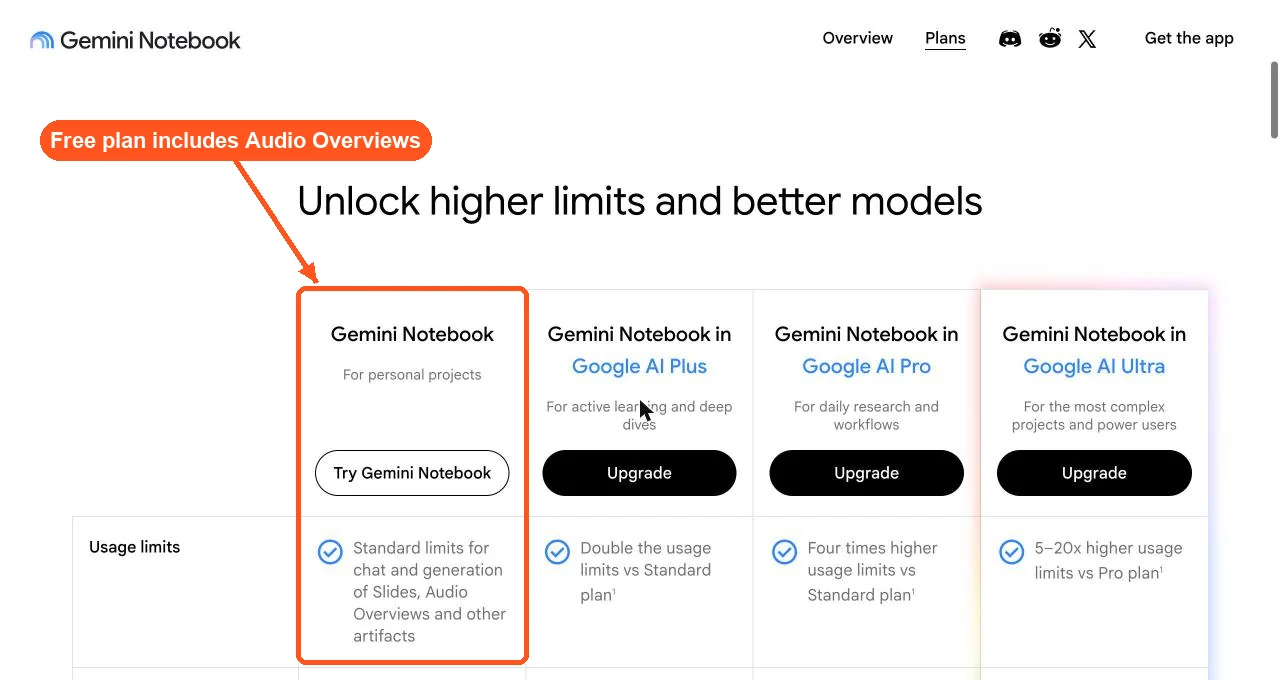
| Free plan / trial | Free plan with standard limits |
| Paid from | Higher limits with Google AI Plus, Pro or Ultra |
| Works on | Web and mobile app |
Verdict: The easiest free way to make an AI podcast from a document. See how to turn a PDF into a podcast.
11. ElevenLabs: best for AI voices, voice cloning and dubbing
ElevenLabs generates realistic AI voices from a script, can clone your own voice, and dubs episodes into other languages.
- Text to speech with many voices.
- Voice cloning (Creator plan and above).
- Dubbing, voice isolation and speech to text.
| Free plan / trial | Free: 10,000 credits a month (no commercial license) |
| Paid from | Starter $6/month |
| Works on | Web app and API |
Verdict: Best for scripted or narrated shows, or for translating episodes.
Quick answers: which AI podcast tool should you use?
Which AI tools are best for podcast post-production?
Use AutoPod for automatic multicam and jump-cut edits in Premiere Pro or DaVinci Resolve. Use Auphonic or Adobe Podcast for audio leveling and cleanup. Use Castmagic or Descript for show notes and transcripts.
Which video podcast editor has the best AI features?
Descript has the broadest set of AI features in one app (text editing, Studio Sound, filler-word removal, clips). If you already edit in Premiere Pro or DaVinci Resolve, AutoPod adds AI multicam and jump cuts without changing editors.
What are the best AI tools for podcast engagement and growth?
Short clips drive most discovery. Opus Clip, Riverside Magic Clips and AutoPod’s Social Clip Creator turn one episode into vertical clips. Castmagic then writes the posts, titles and newsletters to share them.
Which tools are best for editing and show notes together?
Descript and Riverside do both in one subscription. If you edit elsewhere, pair your editor with Castmagic for notes.
What AI can’t replace (yet)
AI is great at the mechanical work, but it doesn’t know what makes your show good. It can’t judge whether a story lands, which tangent to keep, or whether a guest’s claim is true. Use AI to get a clean first cut fast, then spend the saved time on pacing, storytelling and promotion.
FAQ
What is the best AI podcast editor?
For video podcasts edited in Premiere Pro or DaVinci Resolve, AutoPod is the fastest way to automate multicam switching and jump cuts. For editing by transcript in a standalone app, Descript is the most complete. For recording and editing in one browser tool, Riverside is the easiest.
Which AI tool is best for podcast audio quality?
Adobe Podcast Enhance Speech is the quickest free fix for noisy or echoey voice recordings. Auphonic is better when you want consistent loudness, leveling and noise reduction on every episode, and Cleanvoice is best at removing filler words and mouth sounds.
Are there free AI podcast tools?
Yes. Adobe Podcast (Enhance Speech up to 1 hour a day), Auphonic (2 hours a month), Descript, Riverside, Opus Clip, ElevenLabs and Gemini Notebook all have free plans. AutoPod and Cleanvoice offer free trials instead.
Can AI write podcast show notes?
Yes. Castmagic, Descript and Riverside generate show notes, summaries, chapters and social posts from your episode transcript. Always check names, links and timestamps before publishing.
Can AI create a whole podcast from a document?
Yes. Gemini Notebook (formerly NotebookLM) turns PDFs, Docs and notes into a two-host Audio Overview for free. For a podcast in your own voice, write a script and use an AI voice tool such as ElevenLabs.
Will AI replace podcast editors?
Not fully. AI handles repetitive work (cutting silences, switching cameras, cleaning audio, drafting show notes), but pacing, story, fact-checking and taste still need a human editor.
Final thoughts
Most podcasters only need three AI tools: one editor (AutoPod, Descript or Riverside), one audio cleanup tool (Adobe Podcast or Auphonic) and one tool for clips or show notes (Opus Clip or Castmagic). Start with the free plans, keep what saves you time, and upgrade when you hit the limits.
New to podcasting? Start with how to start a podcast with no audience and no money.

Sonu is a passionate blogger who reviews the latest AI tools. With a focus on providing insightful and unbiased reviews, Sonu helps readers navigate the evolving world of artificial intelligence.
Leave a Reply